Skip to the guide

Gem Drop Odyssey: Complete Player Guide

Give a match board weight and the whole thing changes. Pieces stop dropping in tidy columns, gaps stop filling predictably, and the move that looked obvious leaves the board in a state you did not intend. This gem drop odyssey guide is about that difference, which is the only thing separating this format from ordinary match-three.

Tyler MacLeod · Halifax, Nova Scotia · Reviewed September 2, 2026

Read the short answer Jump to the summary

What does “physics” actually change here?

On a flat board a cleared cell is refilled from directly above. On this one the pieces fall, and where they come to rest depends on what the board looks like underneath.

That sounds decorative and is not. When pieces have weight, a gap does not simply pull its column straight down — the stack settles, pieces roll fractionally toward whichever side is more open, and some end up in positions no vertical drop would have produced. Boards built this way develop wells and shelves: places the geometry funnels everything into, and places nothing ever reaches unless you send it there deliberately.

The practical consequence is that board reading becomes a question about slope rather than about columns. Before a move, find the lowest open point in the area you are working. Whatever you clear above it will end up near it. If the piece your objective needs is sitting on a shelf on the far side, no amount of clearing in the middle will bring it down; you have to open a route first.

Specials behave differently too. A blast that removes a circle on a flat grid removes a circle. Here it removes a circle and then everything above rearranges, which is why the same power-up produces wildly different results depending on where it fires. Low and central is predictable; high and near an edge is guesswork.

How gems settle after a clear

Four behaviours account for nearly everything surprising about this board type.

Slope

Pieces drift toward the open side

When a stack settles over an uneven surface it does not land straight. Pieces edge toward whichever side has more space, which is why a clear on the left of a board frequently changes the arrangement on the right and why symmetrical-looking moves are not symmetrical in effect.

Wells

Some cells collect everything

Every board of this kind has one or two low points that the geometry funnels pieces into. They refill constantly and are the cheapest place on the board to work, which makes them the right place to start almost every stage.

Shelves

Others receive nothing

The counterpart to a well is a shelf: a raised pocket that nothing falls into because there is nothing above it to fall. If the objective sits on one, that shelf is the whole stage, and clearing elsewhere is time spent not solving it.

Order

Settling resolves before the next scan

The board finishes moving before it checks for new matches, which is why a clear that looks like it should have chained sometimes does not: by the time the scan runs, the pieces have drifted apart. Judge a move by where things land, not by where they were.

Reading the openings underneath

There is a habit that separates people who plateau on these boards from people who do not, and it is unglamorous: before each move, look at the gaps rather than the pieces.

The pieces tell you what matches now. The gaps tell you what the board will look like afterwards, and on a settling board that second thing is where the value is. A move that clears four pieces and leaves a clean well underneath is worth more than one that clears seven and leaves an awkward ridge, because the well will keep paying for several turns and the ridge will keep costing.

The training version of this takes one stage. Before each move, say which side the stack will drift toward. You will be wrong often at first, which is the useful part; after a dozen boards the drift becomes something you see rather than something you calculate.

See the feature summary

Feature summary

Three features shape how a settling board plays. The right-hand column is the part that changes a decision.

The features that define this board type and what each one means when planning a move
Feature How it behaves What it means for planning
Weighted settling Pieces fall and drift toward the more open side Judge a move by where things land, not what clears
Uninterrupted flow No forced pauses between stages Sessions are shaped by you, not by a timer
Offline campaign Standard stages computed on the device Usable on a commute; check the store listing to confirm
Board outline Irregular, producing wells and shelves Find both before the first move; they decide the stage
Area specials Clear a region, then the board rearranges Fire low and central where the result is predictable

A description of how this board format behaves in play. Any particular app states its own features and requirements on its store listing, which takes precedence over anything written here.

Questions people ask

Does the settling ever work against you deliberately?

No. The behaviour is the same rule applied every time, and it is not weighted for or against the player. What feels like the board conspiring is almost always a drift you did not predict, which is a reading problem rather than a fairness problem.

Is there any benefit to playing quickly?

Only where a stage runs a visible timer, which is uncommon in this format. Otherwise nothing moves until you move, so time spent looking is free, and on a board where the whole difficulty is predicting the settle it is the most valuable thing you can spend.

Can the campaign be played without a connection?

Standard stages are computed on the device, so the main progression generally continues offline once the app has been opened at least once. Leaderboards, cloud saves and timed events will not. The honest test takes thirty seconds on your own phone: switch on flight mode and open a stage.

Are area specials worth saving?

Usually, but not for long. Their value depends entirely on where they fire, so the correct approach is to hold one until a low central target appears rather than to hold it as long as possible. A special still on the board when the stage ends is simply lost.

Why does the same move produce different results?

Because the surface underneath was different. Two clears of the same shape settle differently over an even floor and a ridged one, and the ridge is often two rows down where it is easy not to notice.

Five drills for a single session

One stage each, no purchase and no connection required.

  1. Name the well. Before your first move, find the lowest open point on the board and say it out loud. Play the whole stage from there outward.
  2. Predict the drift. Before each clear, say which side the stack above it will lean toward. Check afterwards.
  3. Compare four against seven. Take a four-piece clear that leaves a clean well over a seven-piece clear that leaves a ridge, and see which board is easier two turns later.
  4. Fire one special high, one low. Same stage, replayed. The difference in what each produced is the whole argument for firing low.
  5. Find the shelf. On a stage you keep failing, identify the cell that never receives a piece. That cell is almost certainly why.

The board, printed

The site is free and stays free. What a web page cannot be is a sheet you draw on, and predicting a settle is exactly the kind of thing worth practising with a pencil.

Ordered by email

The Settling Board Workbook

Eighteen pages built as an exercise book. Each page shows a board mid-stage and asks where the stack will land before you turn over.

  • Twenty-four boards drawn in flat colour, readable in greyscale as well as colour.
  • The settle traced on the reverse of each, with the drift arrows drawn in.
  • A wells-and-shelves atlas of the outlines this format keeps reusing.
  • A page on area specials: the same blast fired from four positions, with the four results.
  • Blank grids at the back for sketching a stage you keep losing.
Format
One PDF, set for A4 and US Letter, unlocked
Length
18 pages
Price
CAD 10, paid once. No account, no renewal.
Payment
Interac e-Transfer, details in the reply
Delivery
By email, usually within two business days
Written by
Tyler MacLeod, in Halifax

Order it by email Terms of the order

A single item sold by a private individual, not a shop. There is no checkout on this domain, no payment page and no card details are collected anywhere: you write, Tyler MacLeod replies with transfer details, and the file follows once the transfer arrives. No sales tax is added and no invoice from a registered business is issued. If it never arrives, or arrives and will not open, say so and the payment is returned in full.

The listing behind the feature table

The feature table sends every app-specific row to the store listing, so it would be unhelpful not to give one. The labels below are copied from the store, not written here.

The application icon as it appears on the Google Play listing

Gummy Drop! Match 3 & Travel, by 7 Hits Games

Install
Free to install
Store labels
Contains ads · In-app purchases
Content rating
Everyone
Checked
September 2, 2026

Open the listing on Google Play

This site downloads and installs nothing. Price, taxes and any fees appear on Google Play at the next step, and the date above records only when these labels were last read.

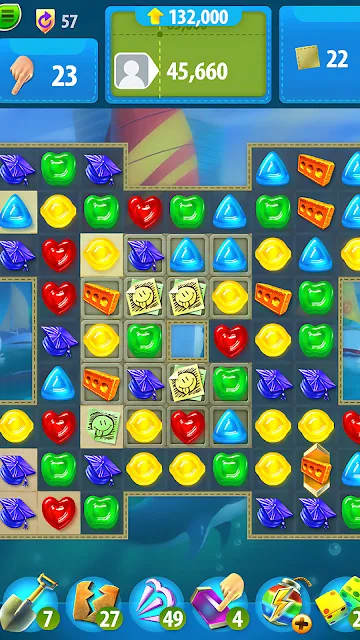
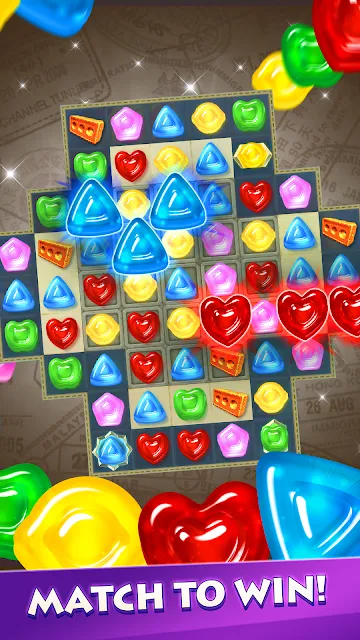
A board of gummy pieces mid-clear, with the objective counters along the top A world map screen with landmarks being rebuilt and a two-of-ten progress marker A gummy board with resource counters above it and a row of boosters underneath
Screenshots taken from the app’s Google Play listing and reproduced here to illustrate the guide. Copyright in the images belongs to 7 Hits Games.

Write to us

[email protected]

Email is the only channel here. There are no forms and no data collection anywhere on this site — you write, and the reply comes back to the address you used.

Email [email protected] Who answers and when